


You must be logged in to take this course → LOGIN | REGISTER NOW
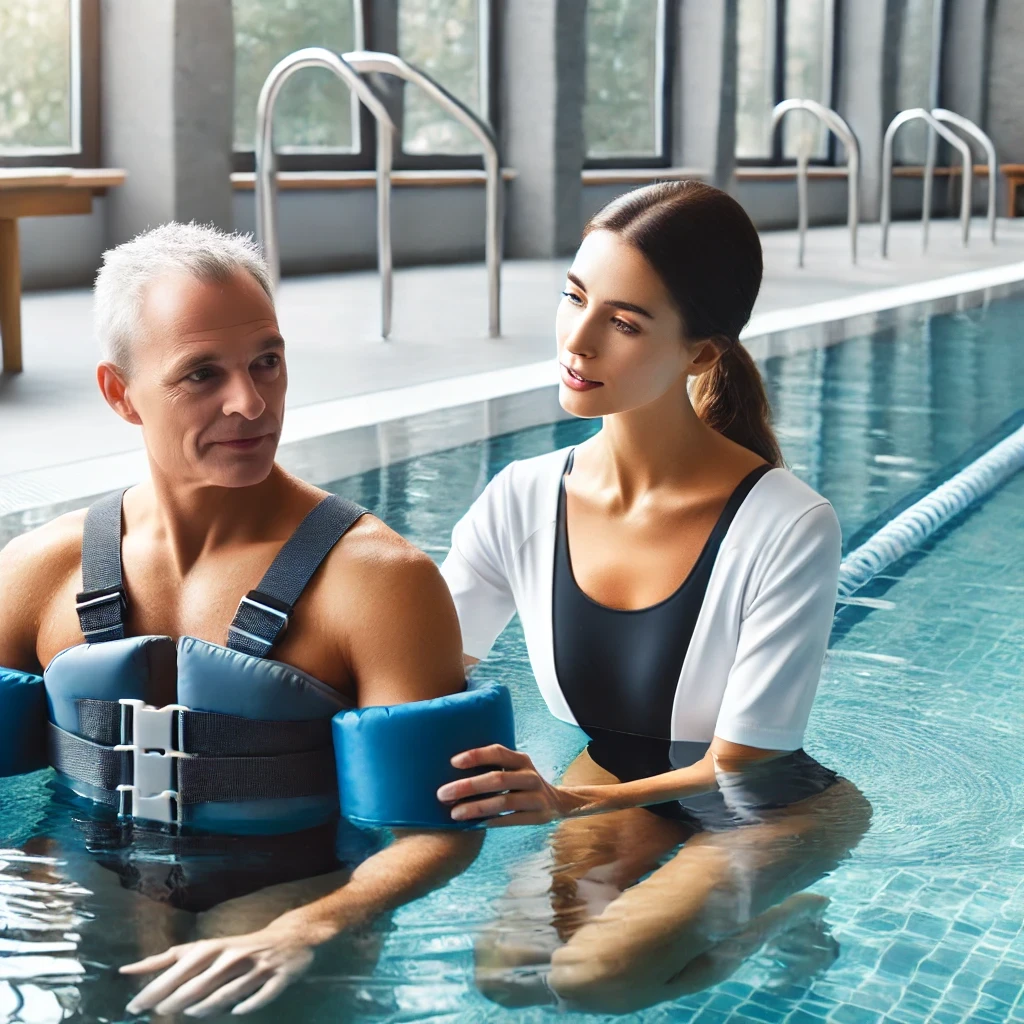
Aquatic therapy is physical therapy that takes place in a pool or other aquatic environment under the supervision of a trained healthcare professional. Aquatic therapy is also known as water therapy, aquatic rehabilitation, aqua therapy, pool therapy, therapeutic aquatic exercise or hydrotherapy.
Students
31
Duration
Unlimited Duration
Lessons & quizzes
16
Last updated
October 1, 2026
About this course
Learning outcome
On completion of the course the participant should be able to:
Week 1 Value and uses of aquatic physiotherapy, contraindications
- Relate these changes to the safe screening of patients prior to Aquatic therapyn
- Evaluate the effectiveness of aquatic therapy in a variety of clinical settings.n
- Demonstrate the ability to confidently use various flotation devices in regard to patient handling Demonstrate the ability to utilise the physical properties of water to improve range of movement for patients with stiff joints or tight soft tissuesn
- Demonstrate safe therapeutic handling of a patent in watern
- Discuss the relevant physical properties of watern
- Demonstrate an understanding of the effects of immersion on the physiology of the human body.n
- Relate these properties to therapeutic techniques in the watern
- Demonstrate an understanding of the effects of immersion on the physiology of the human body.n
- Relate the above two points to the treatment of patients, and to the changes that specific conditions may cause to a person’s “Physical Properties”n
- Demonstrate an understanding of the physical properties of water to strengthening, increase in ROM,rehabilitation, weight bearing, plyometrics, core stability, balance , coordination techniques in the pooln
- Appreciate and experience the effects of buoyancy, turbulence and the metacentre on a body in water.n
- Relate these changes to the safe screening of patients prior to Aquatic therapyn
- Evaluate the effectiveness of aquatic therapy in a variety of clinical settings.n
- Demonstrate the ability to confidently use various flotation devices in regard to patient handling Demonstrate the ability to utilise the physical properties of water to improve range of movement for patients with stiff joints or tight soft tissuesn
- Demonstrate safe therapeutic handling of a patent in watern
Course curriculum
-
- Safe screening of patients prior to Aquatic therapy Unlimited
- Evaluate the effectiveness of aquatic therapy in a variety of clinical settings 00:10:00
- Safe therapeutic handling of a patient in water 00:00:00
-
- Physical properties of water 00:00:00
- The effects of immersion on the physiology of the human body 00:00:00
- Relating the properties to therapeutic techniques in the water 00:00:00
- The physical properties of water to strengthening, increase in ROM, rehabilitation, weight bearing, plyometrics, core stability, balance , coordination techniques in the pool 00:00:00
- Aquatic Therapy for Relaxation, Stabilisation, and Balance 00:00:00
- The effects of buoyancy, turbulence and the metacentre on a body in water 00:00:00
- final quiz 00:06:00
- Test 00:00:00
- test2 Unlimited
Your instructor
Student reviews
No Reviews found for this course.
Questions about this course?
Email [email protected] and we will help you choose the right course.